ADAM
ADAM is a cutting-edge machine learning software designed for genomic data analysis. With its latest version, it features enhanced support for multi-sample coverage, impr... ADAM is a cutting-edge machine learning software designed for genomic data analysis. With its latest version, it features enhanced support for multi-sample coverage, improved Python 3 APIs, and optimized Spark SQL capabilities. Users benefit from streamlined variant calling pipelines, interactive use in various notebooks, and significant performance improvements for genomic queries.
Top ADAM Alternatives
REP
REP (Reproducible Experiment Platform) offers a robust library tailored for machine learning. It features sklearn-like estimators for various libraries, a...

Text Analytics Platform
This Text Analytics Platform leverages Natural Language Processing and Machine Learning to streamline data extraction from text documents. Users can...

Disco Project
Disco is a lightweight, open-source framework designed for distributed computing utilizing the MapReduce paradigm. It efficiently manages data distribution, replication,...
DeepDetect
DeepDetect offers an intuitive platform for deploying deep learning solutions, featuring a Web UI and Jupyter Notebooks with GPU support....

AForge.MachineLearning
AForge.MachineLearning offers a robust set of tools for developers and researchers focused on artificial intelligence and machine learning. With libraries...

LIONoso
This cutting-edge machine learning software harnesses the transformative power of artificial intelligence through a synergistic blend of optimization and data-driven...

Explorium
Explorium AgentSource empowers B2B Go-To-Market agents with a robust toolkit designed to streamline prospecting. By translating natural language queries into...
Apache PredictionIO
Apache PredictionIO® serves as an open-source machine learning server, enabling developers and data scientists to effortlessly create and deploy predictive...
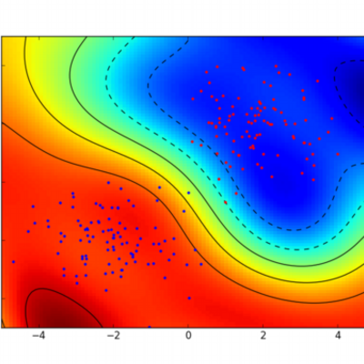
SHOGUN
SHOGUN is a sophisticated machine learning toolbox designed for large-scale kernel methods, emphasizing Support Vector Machines (SVM). It features a...
CloudFactory
CloudFactory offers a robust AI Data Platform designed to accelerate AI project deployment by ensuring reliable model inference and high-quality...
mlpack
Featuring an open governance model and backed by NumFOCUS, mlpack is a fast, header-only C++ machine learning library. It operates...

Datapred
In a landscape of heightened market volatility, Datapred empowers energy and raw material buyers with a streamlined online software solution....

Encog Machine Learning Framework
Encog is a versatile machine learning framework in pure Java/C# that caters to advanced neural network technologies, including genetic programming,...

ioModel
ioModel empowers analytics teams by providing access to sophisticated machine learning models without the need for coding, which streamlines development...

Dlib Machine Learning
Dlib is a versatile machine learning software that offers a plethora of highly modular algorithms, optimized for speed and ease...
Company Information
- Company: Big Data Genomics
Top ADAM Features
- Spark SQL support for genomics
- Python 3 API support
- R API availability
- Hive-style partitioning
- Multi-sample coverage capabilities
- Interactive use in notebooks
- Enhanced variant calling performance
- Rapid alignment with Cannoli
- Parallelized genomic analysis tools
- Streamlined variant effects annotation
- Extensive bug fixes and improvements
- Integration with Spark ecosystem
- Support for multiple genomic formats
- Fast processing on large datasets
- Improved query performance with Catalyst
- Simple API for genomic workflows
- Real-time streaming of genomic data
- Efficient memory usage and serialization
- Comprehensive documentation and user guides
- Community-driven feature development.
